Order #1
✓ Placed
Everyone celebrates this one.
35 days
11 touchpoints · 4 channels · 1 job
Order #2
? Not yet
This is where CLTV is actually made.
this gap is the whole game ↑
01 — The hook
Three messages and hope is not a journey.
Every D2C growth review I sit in has the same rhythm. CAC, ROAS, first orders, a round of applause when the sale numbers land. Then the meeting ends.
Almost nobody asks the next question: what happens to those customers on day 2, day 12 and day 32?
A first order tells you someone was curious enough to try you. It doesn’t tell you they’ll stay. The second order does. That’s the moment a buyer starts turning into a customer, and it’s the moment most brands leave to chance: an order confirmation, a “rate us” email, and a 10% coupon on day 30.
That’s not a journey. That’s three messages and hope.
So this week I want to walk you through how I’d actually build the bridge from order one to order two, using a real and very replenishable brand: Sammvaad Chai. Their festive sale wrapped on 14 October, and every sale leaves behind a fresh cohort of first-time buyers. What happens to them next is the whole game.
02 — Why the gap matters
CLTV isn’t built on the day of the sale. It’s built in the 35 days after it.
Pull up almost any cohort curve and the steepest cliff sits in the same place: between the first order and the second. In the cohort work I do, the pattern is remarkably consistent. Once a customer crosses to order two, the odds of order three look very different.
Whether they cross is decided by five things. Notice that none of them is a discount:
- Confidence
- Did I make a good decision?
- Recall
- Do I still remember who I bought from?
- Experience
- Did it deliver in the first few uses?
- Trust
- When something went wrong, did they fix it?
- Timing
- Were they there just as I was about to run out?
Get these right and the second order feels obvious. Get them wrong and no coupon will save you. Every message in the journey below exists to move a customer one step along this arc:
- Reassurance
- Brand education
- Product confidence
- Experience
- Feedback
- Engagement
- Habit
- Replenishment
- Repeat purchase
one step at a time. never skip to ‘buy again’.
Most brands celebrate the first order. The smartest brands start working on the second order the moment the first one is placed.
03 — The case
Why a chai brand is the perfect classroom
Chai is the most honest category in Indian D2C for this exercise. It’s consumed daily, it runs out on a predictable clock, and the customer always has an alternative at the kirana store downstairs. If your retention system works for chai, it works for most consumables.

Brand snapshot
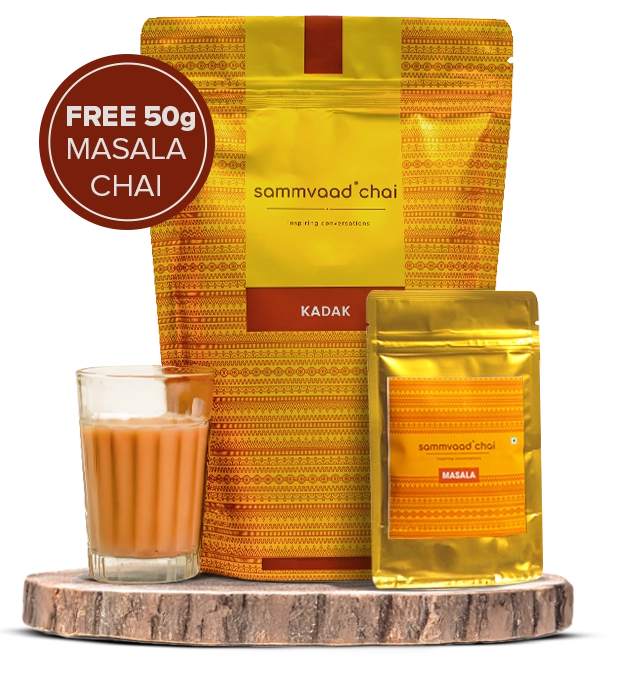
- Freshness is the promise. Sammvaad positions itself as India’s first dedicated CTC chai home-delivery brand, shipping fresh from Assam & Dooars within days. Its site contrasts this with big brands whose chai it says is 9–12 months old.
- The blend. A kadak CTC blend crafted by master blenders from eight teas, sourced from Assam & Dooars estates, with no artificial flavours.
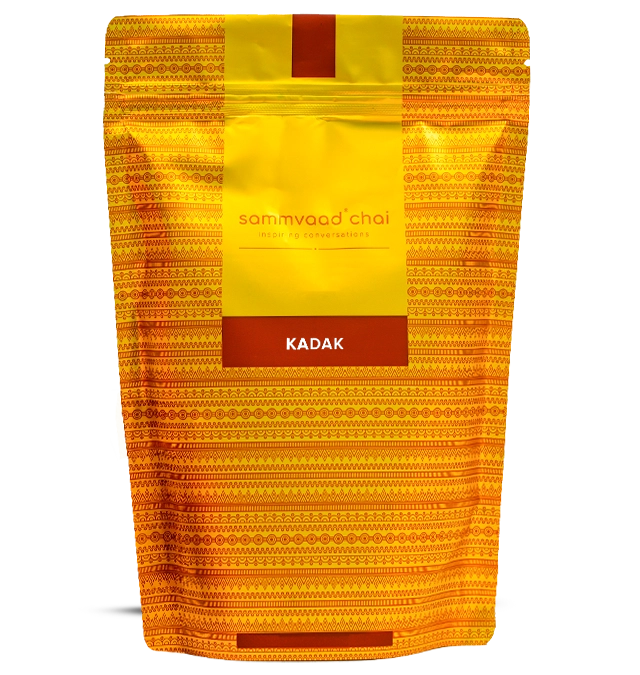
- The pack. Airtight zip-lock pouches, built to hold aroma and strength.
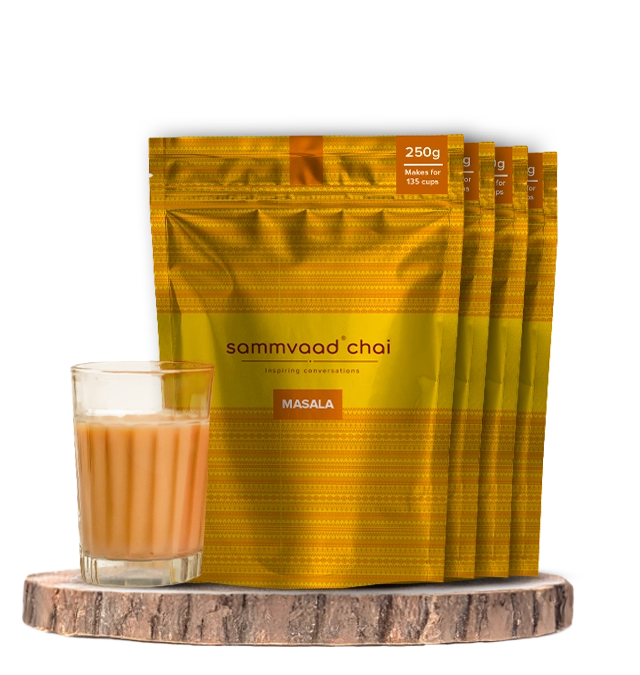
- The range. Kadak in 250 g, 1 kg (+3 free spices) and 2 kg (+6 free spices), plus the newer Masala, blended with real cardamom, clove and cinnamon.
- Proof & convenience. 17k+ five-star reviews displayed on site, COD, and WhatsApp as the support line.
- Product claims. Needs about 30% less tea per cup and 20% less sugar, according to the brand.
Source: sammvaad.com and its About page, accessed 14 Oct 2026. Claims are the brand’s own.
What makes Sammvaad interesting from a retention lens:
- A built-in clock. Packs range from 250 g to 2 kg, roughly an 8× spread in how long a customer’s chai lasts. A one-size “Day 30 reminder” is wrong for most buyers by design.
- A story worth telling before the first sip. Freshness is a claim that needs context. The days between order and delivery are the perfect window to give it.
- Already WhatsApp-native. Support runs on WhatsApp and contest winners are notified there. Customers expect to hear from the brand on that channel.
- Sale-led, big-pack acquisition. The festive offer pushed 1 kg prepaid orders with a lucky draw. Big first orders mean long replenishment windows, so the journey has to be patient, not pushy.
- No visible subscription. A habit-formation opportunity is sitting on the table.
04 — The orchestration
11 touchpoints. 4 channels. One job: earn order #2.
Read this as a system, not a schedule. Two clocks run it:
- D+ days since the order was placed.
- OD+ days since the actual delivery event: the courier’s “delivered” scan, never an assumed date.
And three rules sit above every single message: the customer exits the moment they reorder, a bad experience pauses all promotion, and nobody gets the same message twice on two channels. Not every customer receives every touchpoint. That’s the point.
Before delivery · order clock
- D0WA + Email
- D+1Email
- D+3RCS / Email
- delivery scan
After delivery · delivery clock
- ODWA / SMS
- OD+1WA
- OD+3Branch
- OD+10Email / RCS
- OD+15Email / WA
- OD+25WA / Email
- OD+30WA / Email
- OD+35RCS / WA
⟲ Reorder at any point → exit this journey, cancel everything queued, enter the second-purchase journey.
- SMS
- RCS
D0 · First order placed
You made a great choice.
Objective. Confirm the order, calm the “did I do the right thing?” moment, and say what Sammvaad stands for in one line.
Buyer anxiety peaks in the first hour, especially on COD, where the customer hasn’t paid yet. A warm, specific confirmation is the cheapest RTO insurance you’ll ever buy.
- Signal
- Order placed · first-order flag · payment mode (COD/prepaid) · WhatsApp opt-in
- Logic
- WhatsApp if opted in; email receipt always (transactional). COD orders get a one-tap “confirm order”. No promo, no cross-sell.
Sammvaad
Business account
7:41 PM
zero selling. reassure, then get out of the way.
D+1 · In transit · not yet delivered
Welcome to the Sammvaad story.
Objective. Tell them why Sammvaad exists and what makes it different, before the pouch even arrives.
The wait between order and delivery is dead time for most brands. It’s actually the cheapest brand-building window you’ll ever get: the customer is curious and paying attention.
- Signal
- Not yet delivered · email consent · first order
- Logic
- If already delivered (fast pin codes), skip and fold the story into the delivery message. Brand content only.
Sammvaad · to me
Why your chai will taste different
It’s about time. Literally.
Chai, the way it’s meant to taste: fresh.
Most packaged chai is months old by the time it reaches your kitchen. We started Sammvaad to change that.
Eight teas. Assam & Dooars. Blended by master blenders, packed airtight, shipped within days.
Read our storystory, not sales. not one coupon.
D+3 · Still in transit
From tea gardens to your cup.
- RCS
Objective. Show the chain from estate to doorstep so the customer understands the freshness they’re about to taste.
Product education builds perceived value before consumption begins. If I know my chai was blended from eight teas and shipped within days, I taste it differently. That’s context, not manipulation.
- Signal
- In transit · RCS-capable device · D+1 email opened or ignored
- Logic
- RCS if the device supports it and the D+1 email went unopened; otherwise email. Suppress if already delivered.
Sammvaad
Verified business
From garden to glass
- 1Grown in Assam & Dooars
- 28 teas, one kadak blend
- 3Sealed in a zip-lock pouch
- 4Shipped within days, not months
Your pouch is on its way. Here’s the journey it took.
didn’t open D+1? switch channel, not message.
OD · Courier “delivered” scan
Your Sammvaad has arrived.
- SMS
Objective. Confirm delivery, welcome them into the experience, and make the first cup foolproof.
The first cup is the real product launch. A great chai brewed badly is a bad chai. A good brew guide does more for the second order than any offer.
- Signal
- Delivered webhook from the shipping partner · channel opt-in · local time
- Logic
- WhatsApp if opted in, else SMS on a DLT-approved template. Deliveries after 9 PM wait till 8 AM. No promo.
VM-SAMVAD
Text Message · Today 11:08 AM
trigger on the scan, not the promise date.
OD+1 · 24 h after delivery
How was your first cup?
Objective. Capture first-cup sentiment with a single tap.
This is the most valuable message in the whole journey, and it sells nothing. One tap gives you a first-party signal that decides everything that follows.
- Signal
- Delivered 24 h+ ago · WhatsApp opt-in
- Logic
- Replies map to sentiment: Loved it = positive, It’s okay = neutral, Not for me = negative. Email with three emoji links as fallback.
Sammvaad
Business account
8:30 AM
1 tap = 1 data point. every branch hangs on this.
OD+3 · Sentiment received (or not)
Let the feedback drive the journey.
Objective. Route each customer down the right path based on what they told you, or didn’t.
Retention automation must respond to sentiment, not just elapsed time. Sending “You’ll love our Masala!” to someone who just told you the chai tasted stale is how you lose a customer for good.
- Signal
- OD+1 reply · support ticket status · review status
- Logic
- A negative reply suppresses all promotion across channels until the ticket is closed.
OD+1 reply: 😍 / 🙂 / 😕 / silence
Negative
- Promo hold ON, every channel
- Support reaches out personally, in working hours
- Ask what went wrong: taste, freshness, delivery, pack
- Fix it: brew tweak, replacement or refund per policy
- Resume only when the ticket is resolved
“Sorry your first cup wasn’t right, Riya. Can you tell us what felt off? We’ll make it right.”
Positive
- Thank them, reinforce the choice
- Invite a verified review: one ask, one reminder max
- Continue to OD+10 after a gap
“That made our day! Would you share it in a quick review? It helps other chai lovers find us.”
No response
- Don’t assume they’re happy
- One gentle nudge on a different channel
- Then a neutral, educational path
- No review ask, frequency capped
“Still settling in? Here are 3 ways our regulars make their perfect kadak cup.”
🙂 ‘It’s okay’ = a brew-tweak tip (simmer a minute longer, try Masala), stays on the positive path, no review ask.
OD+10 · Positive, neutral or silent
Good chai deserves good company.
- RCS
Objective. Stay present between purchases with real social proof, a recipe and a reason to share.
Between purchases, the brand’s job is to stay mentally available without sounding like a sales rep. Other customers’ words do that better than yours.
- Signal
- Sentiment · no open ticket · email engagement
- Logic
- Excludes unresolved complaints. Positive reviewers get a “share your chai moment” ask; everyone else gets the recipe-led version.
Sammvaad · to me
What 17k+ five-star reviews say
Chai lovers, in their own words
Good chai deserves good company.
★★★★★ 17k+ five-star reviews
“…actually smells fresh straight out of tea gardens.”Anjali D. · Verified
“…no bloating at all, even after three cups through the day.”Vikram R. · Verified
This week’s cup: a kadak cutting chai for two, plus how to use your free spices.
Get the recipereviews as shown on sammvaad.com, not invented.
OD+15 · Engaged, no open issue
Make great chai a monthly habit.
Objective. Plant the idea of planned replenishment before the pack runs low.
Convenience beats discounts. The goal isn’t to make chai cheaper; it’s to make running out impossible. Habit is the strongest retention driver there is, and one of the least built in Indian D2C.
- Signal
- Pack size · sentiment · last engaged channel
- Logic
- Send on the channel they last engaged with. 1 kg / 2 kg buyers shift later in proportion to pack size. Proposed programme: no subscription is visible on Sammvaad’s site today.
Sammvaad · to me
Never run out of chai again
Fresh chai, on your schedule
Proposed · illustrative
Sammvaad Monthly
Your chai, fresh from Assam & Dooars, on a rhythm that fits your home.
- Pick your pack & how often
- Reminder before every dispatch
- Skip, pause or stop anytime
- Member benefit: [to be set by brand]
convenience first. benefit only if the margin allows.
OD+25 · Shown: one 250 g pack
Running low on chai?
Objective. A predictive, pack-aware heads-up before they run out.
Replenishment timing should follow purchase probability, not the calendar. The best reminder lands just before the customer thinks “I need chai”, not after they’ve walked to the kirana store.
- Signal
- Pack size × quantity · household size if known · median days to 2nd order for similar buyers
- Logic
- OD+25 is illustrative for a single 250 g pack. A 1 kg buyer gets this around OD+100 (assumption, see the maths below). “I still have plenty” pushes it +7 days.
Sammvaad
Business account
9:05 AM
‘I still have plenty’ is free data. use it.
OD+30 · Not yet reordered
Your next great cup is waiting.
Objective. Make reordering a one-tap decision, with the next logical option ready.
A well-timed reminder isn’t a nudge, it’s a service. Pre-fill the cart, offer the next sensible step, and remove every bit of friction.
- Signal
- No reorder · last product & pack · variant affinity
- Logic
- Repeat 250 g buyers see the 1 kg pack; Kadak buyers see Masala as the “try next”. Exit the instant they reorder.
Sammvaad
Business account
9:10 AM
cart pre-filled. one tap, not five.
OD+35 · Still no reorder
Still thinking? Here’s something worth coming back for.
- RCS
Objective. The last structured attempt: proof, quality and a cross-sell first, and only then a controlled incentive.
Incentives should be the final lever, not the foundation of the relationship. Lead with discounts and you teach customers to wait for them.
- Signal
- No reorder after OD+30 · past channel engagement · margin headroom
- Logic
- Offer shown only to a test group; a holdout gets none, so you measure what the incentive truly adds. Still no order? Move to a slower lapse / win-back cadence.
Sammvaad
Verified business
Kadak 1 kg
Masala
Illustrative offer
the incentive is the last lever. and it gets a holdout.
05 — The intelligence
Same journey. Five very different customers.
A calendar treats every customer the same. A system reads what each customer does and changes course. Here’s the journey through five illustrative customers:
The happy brewerTaps “Loved it”.
Thank-you and review ask on OD+3, social proof on OD+10, habit on OD+15, pack-aware reminder, one-tap reorder. The shortest road to order two.
The unhappy first cupSays the chai tasted weak.
Every promotion pauses on every channel. Support reaches out, suggests a brew fix or replacement. The journey resumes only after resolution, softly, from social proof, never a sales push.
The silent oneNever replies.
Not treated as happy. One nudge on a different channel, then a neutral, educational path. No review ask. Frequency capped.
The early reordererBuys again on OD+18.
Exits immediately. Every queued message is cancelled. Moves into the second-purchase journey: variant discovery, loyalty, habit.
The 1 kg buyerBought big in the festive sale.
Same early touchpoints, then the clock stretches. Habit and replenishment shift out in proportion to pack size. Nagging someone with a full kilo of chai on day 25 trains them to ignore you.
The rules above every message
- Exit on reorder. Order two moves them to the second-purchase journey; everything queued is cancelled.
- Service-recovery hold. An open ticket means zero promotion, on every channel.
- Cross-channel suppression. If the WhatsApp was read, its email twin doesn’t go.
- Frequency cap. At most one marketing touch a day. My default starting point; tune it to your data.
- Consent & eligibility. WhatsApp needs opt-in and approved templates. SMS in India needs DLT-registered templates. RCS only reaches capable Android devices, so every RCS step needs a fallback.
- Quiet hours. Nothing before 8 AM or after 9 PM local time.
06 — The data
Every “when” should come from data.
Here’s the back-of-the-envelope I’d start with, and throw away the moment real cohort data arrives.
How long does a pack really last?
Assumption ~2 g of chai per cup (about a teaspoon; the brand says its chai needs less per cup) and a household making 4 cups a day.
| Pack | Cups | Lasts | First replenishment nudge |
|---|---|---|---|
| 250 g | ~125 cups | ~31 days | around OD+25 |
| 1 kg | ~500 cups | ~125 days | around OD+100 |
| 2 kg | ~1,000 cups | ~250 days | around OD+200, with a mid-way habit check-in |
illustrative maths, not Sammvaad data. the point is the spread, not the precision.
The rule of thumb I start with: first nudge = delivery date + roughly 80% of the expected consumption window. Then I validate it against the cohort’s actual reorder curve and move it.
What I’d replace my maths with:
- Median days to second order, by pack size and variant. This anchors every reminder.
- The distribution, not just the median. Fire the first nudge around where the earliest 30–40% of reorders start.
- Purchase quantity. Two 250 g packs are not one.
- OD+1 sentiment. Decides the path.
- Channel engagement. Decides the channel.
- Acquisition source. Festive-sale buyers and full-price buyers can behave very differently. Read their cohorts separately.
07 — The scoreboard
Metrics that matter
Opens and clicks tell you whether people saw a message. These tell you whether the journey is building customers:
- 01
First-to-second purchase rateThe headline: % of first-time buyers who place order two in the window.
- 02
Median time to second purchaseShows whether the journey speeds up the habit, and recalibrates your timing.
- 03
Repeat rate by cohortMonthly and sale vs non-sale cohorts. Blended averages hide the truth.
- 04
Retention revenue per customerRevenue from order two onwards per acquired customer. The bridge to CLTV.
- 05
Review submission rateHow well the positive branch turns happy customers into proof.
- 06
Negative feedback recovery rateUnhappy customers resolved who still reorder. The most underrated number in retention.
- 07
Replenishment / subscription adoptionIf you launch a habit programme, this tells you whether convenience is landing.
- 08
Incremental revenue vs holdoutThe only honest answer to “did it work?” Keep a 5–10% control group.
- 09
Revenue per recipient, by channelWhatsApp and RCS cost money per message. Each channel must earn its place.
- 10
Unsubscribe & opt-out rateThe cost side of every message. Track it per touchpoint, not just overall.
08 — Save this
The whole journey on one page
Every row also inherits the global rules: exit on reorder, promo hold on open tickets, cross-channel suppression, consent, quiet hours.
Swipe the table sideways →
| When | Touchpoint | Channel | Trigger | Data | Exit |
|---|---|---|---|---|---|
| D0 | Confirm & reassure | WhatsApp + Email | First order placed | Order, payment mode, opt-in | Cancelled order |
| D+1 | Brand story | In transit | Delivery status, email consent | Already delivered → merge into OD | |
| D+3 | Sourcing & freshness | RCS / Email | In transit | RCS capability, D+1 open | Delivered; RTO |
| OD | Arrival + brew guide | WhatsApp / SMS | Delivered scan | Courier webhook, local time | Quiet hours |
| OD+1 | First-cup sentiment | 24 h post-delivery | Reply tap | Open ticket | |
| OD+3 | Branch: recover / review / nudge | WhatsApp / Email | Sentiment or silence | Sentiment, ticket, review status | Negative → promo hold |
| OD+10 | Social proof & recipe | Email / RCS | Not negative | Sentiment, engagement | Open ticket; reordered |
| OD+15 | Habit / replenishment idea | Email / WhatsApp | Engaged | Pack size, last channel | Reordered; big pack → shift later |
| OD+25 | Pack-aware heads-up | WhatsApp / Email | Predicted low stock | Pack × qty, cohort median | Reordered; “plenty” → +7 d |
| OD+30 | One-tap reorder / upgrade | WhatsApp / Email | No reorder | Last SKU, variant affinity | Reordered |
| OD+35 | Proof, cross-sell, tested offer | RCS / WhatsApp / Email | Still no reorder | Engagement, margin, test group | Reordered; holdout gets no offer |
09 — The CLTV Guy’s takeaway
Your post-purchase journey shouldn’t be a calendar of messages. It should be a system that listens to customers, understands their buying behaviour, and knows when to act.
Eleven touchpoints sounds like a lot. It isn’t, because no single customer gets all eleven. The unhappy customer gets an apology and a fix. The silent one gets space. The 1 kg buyer gets patience. The happy one gets a reason to come back at exactly the right moment.
That’s the difference between automation and orchestration.

Ganesh Kamble
The CLTV Guy · Co-founder, Retention Max
Attention is rented. Retention is owned.
Case-study note: Sammvaad is referenced as an independent, illustrative case study. Brand names, product images and claims belong to their owners and are taken from sammvaad.com. The journey above is a proposed strategy, not Sammvaad’s current programme. No affiliation is implied.